
The White Blazes

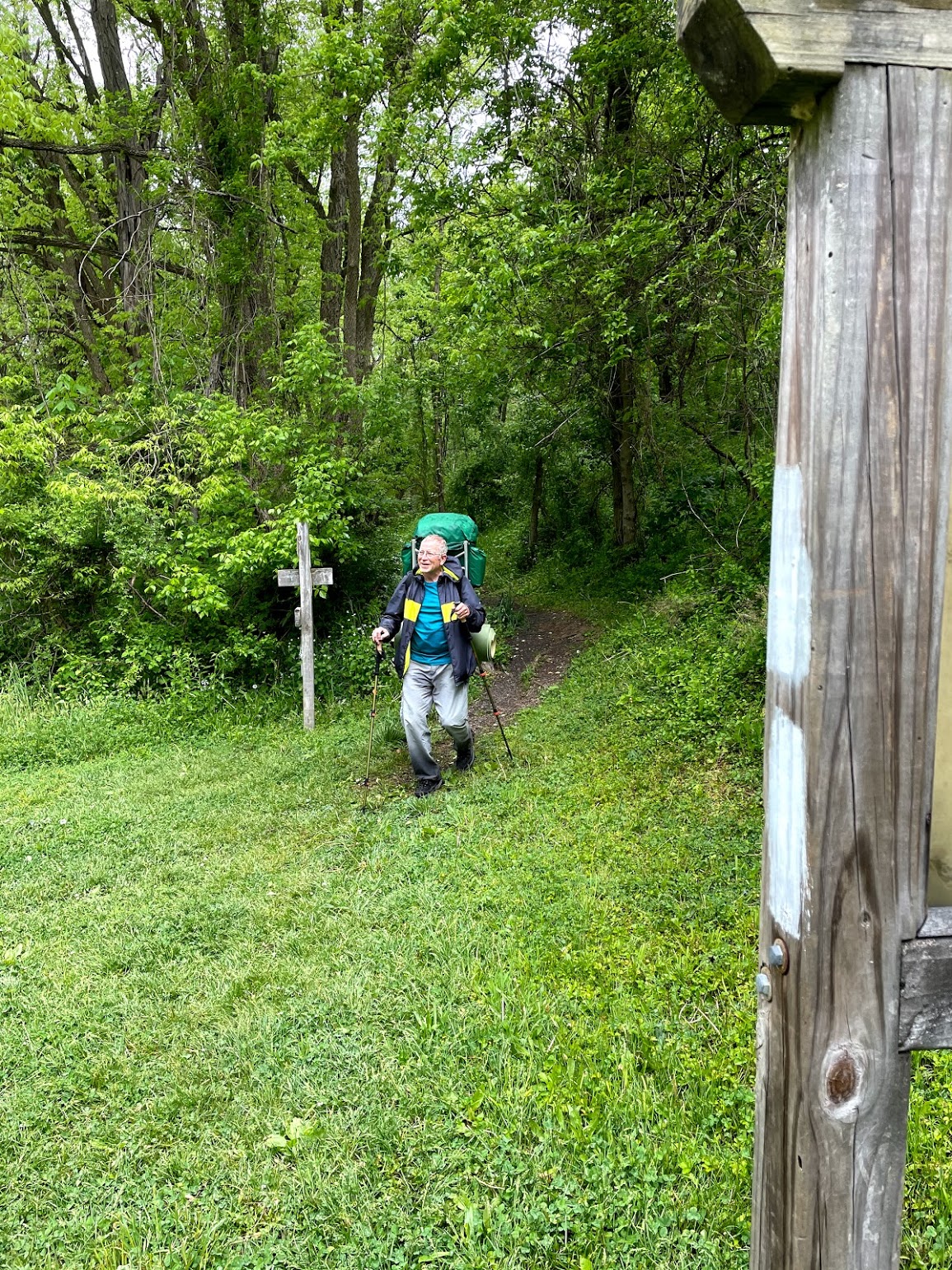
We made it!!

If you have ever wondered what it is like to hike the Appalachian Trail, it is apply defined by the words extreme adventure!

As you trod over the well-worn path, one step after another leads to decisions, caution, carefulness, speed, slowness, rest, joy, possibilities, views, varying weight, anticipation, etc.

As I recently hiked a section in Virginia with a friend, the AT reminded me of participating with Christ in living His life, the Christian life! Indeed, when Jesus invites us to follow him (Matthew 16:24), a good synonym would be extreme adventure!

As you hike the AT, there are many items needed such as hiking shoes, back pack, trekking poles, tent, food, much planning, and major will power to make this trek successful. But above all, there is something you must have to make it from Springer Mt. in Georgia to Mt. Katadhin in Maine. What is it? The infamous white blazes. There are approximately 165,000 of these rectangular 2 x 6 inch white markings that are found on trees, posts, and rocks. The distance between each blaze varies but they are the “law” on the trail; they are the surety markers if you are to stay on trail.

In this extreme adventure of following Christ, we have an eternal white blaze that guides us every step in this journey of life, the Word of God (Psalms 23:1-3; 32:8-9; 119:105; John 14:6; Colossians 2:6). Just as I cannot stay on trail without the white blazes, neither can I participate in Christ’s life without His Word (Galatians 2:20).

This life will offer many different side paths to take (e.g. blue blazes) that may or may not be beneficial. There will be rocks, creeks, roots, decisions, caution, carefulness, speed, slowness, rest, joy, possibilities, views, varying weight, anticipation, etc. along the trail of life, but you must daily follow the white blaze of God’s Word. These white markers are surety on the AT; the Word of God is the same in this trek of life.

For we have not followed cunningly devised fables, when we made known unto you the power and coming of our Lord Jesus Christ, but were eyewitnesses of his majesty. 17 For he received from God the Father honour and glory, when there came such a voice to him from the excellent glory, This is my beloved Son, in whom I am well pleased. 18 And this voice which came from heaven we heard, when we were with him in the holy mount. 19 We have also a more sure word of prophecy; whereunto ye do well that ye take heed, as unto a light that shineth in a dark place, until the day dawn, and the day star arise in your hearts: 20 Knowing this first, that no prophecy of the scripture is of any private interpretation. 21 For the prophecy came not in old time by the will of man: but holy men of God spake as they were moved by the Holy Ghost. (2 Peter 1:16-21)

Establish my footsteps in Your word… (Psalm 119:133).

More COVID Counsel

How Elevators Work | HowStuffWorks

Often, after supper, my wife and I read from Chuck Swindoll’s devotional, The Finishing Touch. He has been a long distance mentor of mine since the late 70s through his writings, preaching, grace living and laughter! He, among others, has helped to keep me balanced in life.

Having dealt this weekend with more of the ups and downs of the state-by-state, county-by-county, store-by-store, people-by-people response to COVID, Denise and I found this devotional last night to be encouraging and edifying. Grab a cup of coffee and read “Stop the Elevator.”

Elevators are weird places. You’re crammed in with folks you’ve never met, so you try really hard not to touch them. And nobody talks, except for an occasional “Out, please.” You don’t look at anyone; in fact, you don’t look anywhere but up, watching those dumb floor numbers go on and off.

In a strange sort of way, an elevator is a microcosm of our world today: a crowded, impersonal place where anonymity, isolation, and independence are the norm.

A recently published report by sociologist Ralph Larkin on the crises facing suburban youth underscores several aspects of this new malaise of the spirit. Many children of affluence are depicted as passively accepting a way of life they view as empty and meaningless, resulting in a syndrome that includes “a low threshold of boredom, a constricted expression of emotions, and an apparent absence of joy in anything that is not immediately consumable.”

Exit: involvement and motivation.

Enter: indifference; noncommitment; disengagement; no sharing or caring; meals eaten with headsets turned up loud; separate bedrooms, each with a personal telephone, TV, and private bath; and an it’s-none-of-your-business attitude.

Dr. Philip Zimbardo, author of one of the most widely used psychology textbooks, addressed this issue in a Psychology Today article entitled “The Age of Indifference.”

I know of no more potent killer than isolation. . . . It has been shown to be a central agent in the etiology of depression, paranoia, schizophrenia, rape, suicide, mass murder. . . . The Devil’s strategy for our times is to trivialize human existence in a number of ways: by isolating from one another while creating the delusion that the reasons are time pressures, work demands, or anxieties created by economic uncertainty.

Philip G. Zimbardo, “The Age of Indifference”, Psychology Today, August 1980, 71-76.

We must come to terms with all this. The need is urgent! Our Savior modeled the answer perfectly. He cared. He listened. He served. He reached out. He supported. He affirmed and encouraged. He touched as well as stayed in touch. He walked with people . . . never took the elevator.

The only escape from indifference is to think of people as our most cherished resource. We need to work hard at reestablishing family fun, meaningful mealtimes, people involvement, evenings without the television blaring, times when we genuinely get involved with folks in need—not just pray for them.

Stop the elevator. I want to get off.

“Speech is civilization itself. The word, even the most contradictory word, preserves contact—it is silence which isolates” (Thomas Mann).

To escape indifference, think of people as our most cherished resource.

— Charles R. Swindoll (Excerpted from The Finishing Touch, Copyright © 1994 by Charles R. Swindoll, Inc. Word Publishing)